If your healthcare provider has recommended low fiber foods, you may be wondering what you can safely eat without sacrificing balanced nutrition. While fiber is an essential part of a healthy diet for most people, there are times when temporarily reducing fiber can help the digestive system rest and recover.
A low-fiber diet is often recommended before certain medical procedures, after gastrointestinal surgery, or during flare-ups of digestive conditions. The goal isn’t to avoid fiber forever but to reduce foods that leave more residue in the digestive tract.
This guide explains which foods are considered low in fiber, when a low-fiber diet may be appropriate, what to avoid, and how to plan meals while supporting your overall health.
What Are Low Fiber Foods?
Low fiber foods contain relatively small amounts of dietary fiber per serving. These foods are easier to digest and generally produce less waste as they move through the intestines.
Unlike foods high in fiber, which support long-term digestive health, low-fiber options are usually recommended for specific medical reasons or short-term dietary needs.
Common examples include:
- White bread
- White rice
- Regular pasta
- Eggs
- Chicken
- Fish
- Lean beef
- Tofu
- Yogurt
- Cottage cheese
- Ripe bananas
- Applesauce
- Peeled potatoes
Most healthy adults should not follow a low-fiber diet unless advised by a healthcare professional.
When Are Low Fiber Diet Foods Recommended?
There are several situations where low fiber diet foods may help reduce strain on the digestive system.
Healthcare providers may recommend them for:
- Recovery after bowel surgery
- Inflammatory bowel disease (IBD) flare-ups
- Diverticulitis during acute episodes
- Bowel narrowing (strictures)
- Before a colonoscopy
- Temporary digestive irritation
- Certain cancer treatments involving the digestive tract
The recommendation depends on your individual medical condition, so always follow your healthcare provider’s instructions.
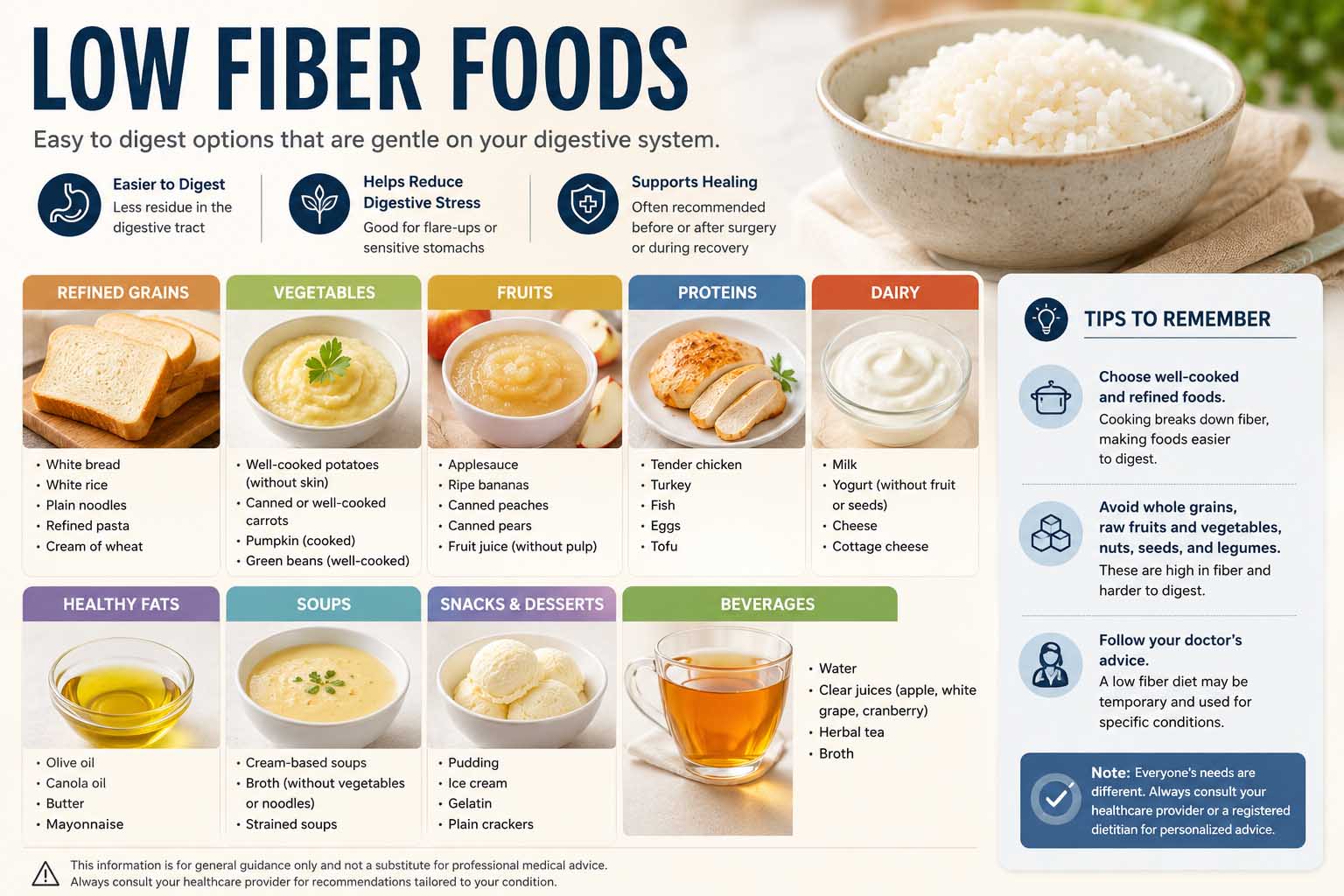
Low Fiber Foods List
The following foods are commonly included in a low-fiber diet.
| Food Group | Low-Fiber Choices |
|---|---|
| Grains | White bread, plain bagels, white rice, refined pasta |
| Protein | Chicken, turkey, fish, eggs, lean beef, tofu |
| Dairy | Milk, yogurt without fruit pieces, cheese, cottage cheese |
| Fruits | Bananas, applesauce, canned peaches, melon |
| Vegetables | Peeled potatoes, cooked carrots, zucchini without skin, pumpkin |
| Snacks | Crackers, pretzels, plain cookies, rice cakes |
| Desserts | Gelatin, pudding, plain ice cream in moderation |
Preparation matters. Cooking vegetables until soft and removing skins or seeds can reduce fiber content even further.
Foods to Limit or Avoid
Many nutritious foods are naturally high in fiber and may need to be limited during a low-fiber diet.
Examples include:
- Whole-grain bread
- Brown rice
- Bran cereals
- Beans
- Lentils
- Chickpeas
- Nuts
- Seeds
- Popcorn
- Raw vegetables
- Corn
- Berries
- Dried fruit
These foods can usually be reintroduced once your healthcare provider says it’s appropriate.
Sample One-Day Low-Fiber Meal Plan
Planning meals becomes much easier with a simple outline.
Breakfast
- Scrambled eggs
- White toast
- Yogurt
- Banana
Morning Snack
- Applesauce
- Plain crackers
Lunch
- Grilled chicken
- White rice
- Cooked carrots
Afternoon Snack
- Cottage cheese
- Canned peaches
Dinner
- Baked fish
- Mashed peeled potatoes
- Cooked zucchini
Dessert
- Vanilla pudding
This menu provides protein, carbohydrates, and essential nutrients while keeping fiber relatively low.
Low Fiber Foods Before Medical Procedures
Doctors often recommend a low-fiber diet before certain procedures because it reduces residue in the digestive tract.
For example, before a colonoscopy, patients typically transition from low-fiber foods to clear liquids as instructed by their healthcare team.
Likewise, some people recovering from digestive illnesses may temporarily eat full liquid diet foods before gradually advancing to soft and low-fiber meals.
Always follow the preparation instructions provided by your healthcare provider, as recommendations can vary.
Benefits of a Low-Fiber Diet
Although fiber offers many health benefits, reducing fiber temporarily can be helpful in specific situations.
Potential benefits include:
- Less bowel irritation
- Reduced abdominal pain during flare-ups
- Fewer bowel movements
- Easier digestion
- Lower stool volume
- Improved comfort after certain surgeries
These benefits are generally intended for short-term medical management rather than long-term eating.
Possible Risks of Staying on a Low-Fiber Diet Too Long
A low-fiber diet isn’t suitable for everyone over the long term.
Extended use may contribute to:
- Constipation
- Reduced gut microbiome diversity
- Lower intake of vitamins and minerals
- Less dietary variety
- Increased difficulty maintaining regular bowel habits
Once it’s medically appropriate, healthcare providers often recommend gradually returning to a balanced eating pattern.
Can You Still Eat Fruits and Vegetables?
Yes, but choose varieties that are naturally lower in fiber and prepare them properly.
Good options include:
Fruits
- Bananas
- Cantaloupe
- Honeydew
- Applesauce
- Canned pears
- Canned peaches
Vegetables
- Peeled potatoes
- Cooked carrots
- Green beans
- Pumpkin
- Squash
- Zucchini without skin
Cooking vegetables until soft often makes them easier to digest.
Low Fiber Foods and Other Special Diets
Some people need to balance more than one dietary recommendation at the same time.
For example, individuals with kidney disease may also need guidance on low phosphorus foods, depending on their medical condition. Because dietary needs can overlap, personalized advice from a registered dietitian is often the safest approach.
Similarly, after dental procedures, people often choose softer meals. While many options overlap with foods to eat after tooth extraction, always consider whether your healthcare provider has given additional restrictions based on your digestive health.
What About High Fiber Low Carb Foods?
Many people searching for digestive health information also come across terms like high fiber low carb foods or low carb high fiber foods.
These foods can be excellent choices for many healthy adults because they support blood sugar control, fullness, and digestive health.
However, they usually aren’t recommended during a temporary low-fiber diet because the goal is to reduce fiber intake rather than increase it.
Examples include:
- Chia seeds
- Flaxseed
- Broccoli
- Brussels sprouts
- Avocados
These foods may be reintroduced once your healthcare provider approves.
Are High Fiber Low Calorie Foods Healthy?
Yes. High fiber low calorie foods such as leafy greens, berries, beans, and many vegetables play an important role in a balanced diet for most people.
The key difference is timing.
A low-fiber diet serves a medical purpose for selected individuals, while a high-fiber eating pattern is generally recommended for long-term health once digestive restrictions have ended.
Tips for Following a Low-Fiber Diet
These practical habits can make the diet easier to follow.
- Read food labels carefully.
- Choose refined grains temporarily.
- Peel fruits and vegetables when appropriate.
- Remove seeds from produce.
- Cook vegetables until soft.
- Eat smaller meals throughout the day.
- Stay hydrated.
- Follow your healthcare provider’s timeline.
Most people only need this eating pattern for a limited period.
Common Myths About Low Fiber Foods
Myth: Fiber is always bad.
Reality: Fiber is beneficial for most people. Low-fiber diets are usually temporary and medically directed.
Myth: You can’t eat fruits.
Reality: Several fruits, including bananas and applesauce, fit well into many low-fiber meal plans.
Myth: Low-fiber diets are unhealthy.
Reality: When followed for the recommended duration and under medical guidance, they can be a valuable part of treatment or recovery.
Myth: Everyone with stomach pain should avoid fiber.
Reality: Digestive symptoms have many causes. A healthcare professional can determine whether reducing fiber is appropriate.
Transitioning Back to a Higher-Fiber Diet
When your healthcare provider says it’s safe, increase fiber gradually instead of making a sudden change.
Helpful steps include:
- Add one higher-fiber food at a time.
- Drink plenty of water.
- Monitor digestive symptoms.
- Increase whole grains gradually.
- Include more fruits and vegetables over several days.
If you’re unsure where to begin, learning the best time to take fiber supplement may also be useful if your healthcare provider recommends supplementation during the transition.
Frequently Asked Questions
What are the best low fiber foods?
White rice, white bread, refined pasta, eggs, lean meats, yogurt, bananas, applesauce, peeled potatoes, and well-cooked vegetables are among the most common choices.
How long should I follow a low-fiber diet?
The duration depends on your medical condition. Some people only need it for a few days, while others may require it for several weeks under medical supervision.
Can I eat chicken on a low-fiber diet?
Yes. Plain grilled, baked, or roasted chicken contains virtually no fiber and is commonly included.
Is oatmeal low in fiber?
Traditional oatmeal contains more fiber than many foods allowed on a low-fiber diet. Whether it’s appropriate depends on your healthcare provider’s recommendations.
Can I drink coffee?
Many people can drink coffee unless they’ve been advised to avoid it. If caffeine worsens your symptoms, your healthcare provider may suggest limiting it temporarily.
Practical Tips for Eating Well While Limiting Fiber
A low-fiber diet can be an effective short-term tool for managing certain digestive conditions, preparing for medical procedures, or recovering after surgery. The key is choosing foods that are gentle on the digestive system while still meeting your nutritional needs.
As your symptoms improve or your recovery progresses, work with your healthcare provider or a registered dietitian to safely reintroduce fiber-rich foods. For most people, returning to a balanced diet that includes fruits, vegetables, whole grains, and legumes supports long-term digestive health and overall wellness.